$ whoami
I’m a fifth year student at the Masters of Science Programme in Computing Science and Engineering at Umeå University. Some of my biggest interests are software development, Linux, motorcycling, snowmobiling and learning new things.
$ man jonwin.se
On this website I intend to document different projects that I work on and share my thoughts about them.
Visit my GitHub profile to view the source code for this page and all of my other projects.
(updated 2026-08-15)
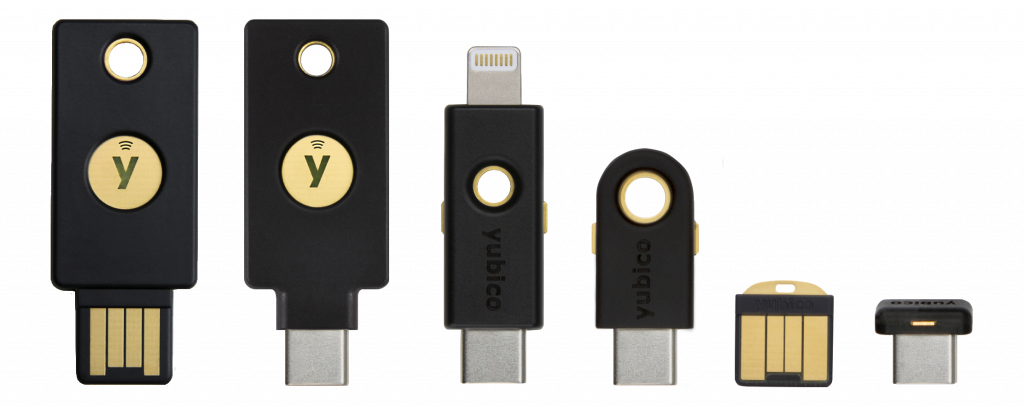
FIDO2 based Full Disk Encryption on NixOS
This article describes how to use YubiKeys for FIDO2-based Full Disk Encryption (FDE) on NixOS. The keys can be used as single-factor authentication devices or in combination with a pin. Throughout this guide, names surrounded by < > characters are used as placeholders, replace them with the appropriate values. Preparations Installer Get a minimal ISO image and boot it. Switch to the root user. sudo -i Optionally, change the keyboard layout. ...
(Old) YubiKey based Full Disk Encryption on NixOS
Note: I have found a different approach to achieve the same thing as described in this post. It is, in my experience, both easier to configure, more reliable, and easier to maintain. This article describes how to set up YubiKey-based Full Disk Encryption (FDE) on NixOS. The YubiKeys are used as single-factor authentication devices and allow the system to automatically decrypt the disk during boot without user interaction, as long as a key is plugged in. ...

Yubikey SSH
Quick guide for creating and using FIDO2 resident keys for ssh authentication. Verified working on YubiKey 5 Series keys. Prerequisites Make sure the ssh-agent is running: eval "$(ssh-agent -s)" Generate a new ssh key on a YubiKey ssh-keygen -t ed25519-sk -O resident -C "[email protected]" Temporarily add key to a computer This adds the key to the ssh agent and it will continue working until the computer is rebooted, after which it must be readded. ...
JWMenu: A Simple, Configurable Menu Runner
JWMenu is a small, configurable menu runner built on top of rofi. It is designed to be easy to configure by using TOML configuration files instead of relying on long scripts with hardcoded options. You can create nested submenus, assign commands to entries, or even have multi-line commands. This makes it ideal for things like: System menus Power menus Quick options and toggles …and anything else you can imagine that fits into a hierarchical menu. ...
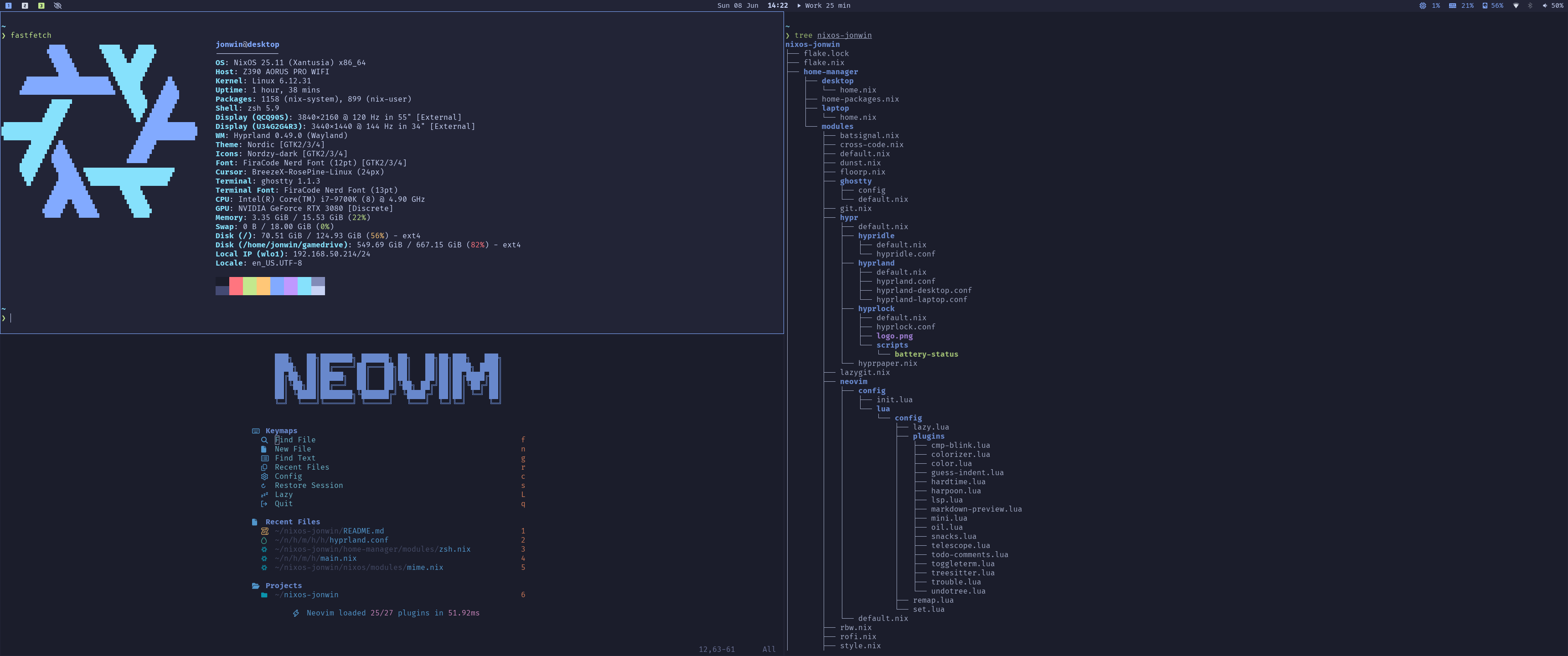
❄️ NixOS Config
Welcome to my NixOS configuration, you can find the repo here. ✨ Features 🖥️ Multiple Hosts Support: Easy to configure for different hosts. 🪟 Hyprland + Waybar: Highly configurable window compositor on Wayland. 🏠 Home Manager Integration: Manage user-specific configurations with ease. 🐚 Zsh + Starship: Efficient shell setup with lots of aliases. 👻 Ghostty: Fast and feature-rich terminal emulator. ✍️ Neovim: With simple configuration through nvf. 🔑 YubiKey Login: Fast and secure authentication with YubiKeys. 💾 Full Disk Encryption: YubiKey-based FDE for secure and convenient unlock. ✨ Stylix: Unified system theming. 📝 Notes I’ve chosen to tightly integrate Home Manager and NixOS within the same file and directory structure, rather than separating them into different files and folders. This keeps the configuration more cohesive but comes with some important caveats: Home Manager options must always be written inside a: home-manager.users.${user} = { ... }; block within your configuration files. Home Manager attributes cannot be imported at the top level (outside of the home-manager.users.<user> block). For example: { pkgs, user, ... }: { home-manager.users.${user} = { config, ... }: { programs.rofi = { ... theme = let inherit (config.lib.formats.rasi) mkLiteral; in { ... }; }; }; } Here, note that config is only available within the home-manager.users.<user> block—trying to import Home Manager attributes directly at the top level will fail. This design choice reduces duplication and keeps related configurations together, but it requires extra attention to module scoping and to distinguishing between NixOS and Home Manager settings. If you prefer a more typical separated configuration structure (e.g. fully declarative Home Manager setup using home.nix per host), check out Andrey0189’s NixOS Config Reborn, which this repository was briefly based on before the latest refactor. 🚀 Installation Install NixOS. I follow these steps to use full disk encryption with Yubikey unlock, if you don’t want to use this approach follow the NixOS Installation Guide instead. ...
Build package from Nixpkgs PR
This post aims to explain how to build and try packages from nixpkgs pull requests. You might for example want to try a new package that has not been merged yet or try some bug fixes. There are multiple ways of doing this, below are two different methods. In both cases we first need to clone nixpkgs and navigate into this directory git clone [email protected]:NixOS/nixpkgs.git cd nixpkgs nix-build This approach is better if you want to install and use the package for a while. ...
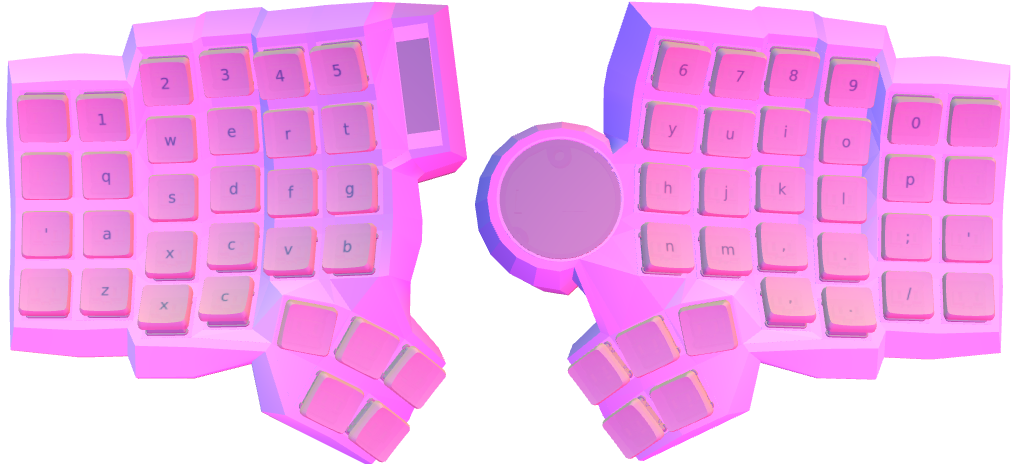
Keyboard
I am planing to build a custom split, ergonomic, ortholinear, curved keyboard like the dactyl manuform or charybdis. My keyboard has been configured with the beta version of the Cosmos keyboard configurator found here. I will update this page as my plans change and when I have built it. Configuration Right half Left half Components 2 Pro Micro USB-C Controller 62 Kailh Choc Switches 60 1u Kailh Choc Keycaps 2 1u Homing Kailh Choc Keycaps Cirque 40 mm Trackpad Wire for Trackpad OLED 0.91" 128x32 62 1N4148 Diodes TRRS Cable Set of TRRS Jacks 2 M3 x 8mm Screw 18 M3 x 6mm Screw 20 M3 Screw Inserts 8 Rubber Feet Wires 3D Printed: Case/Shell Bottom Plate Microcontroller Holder
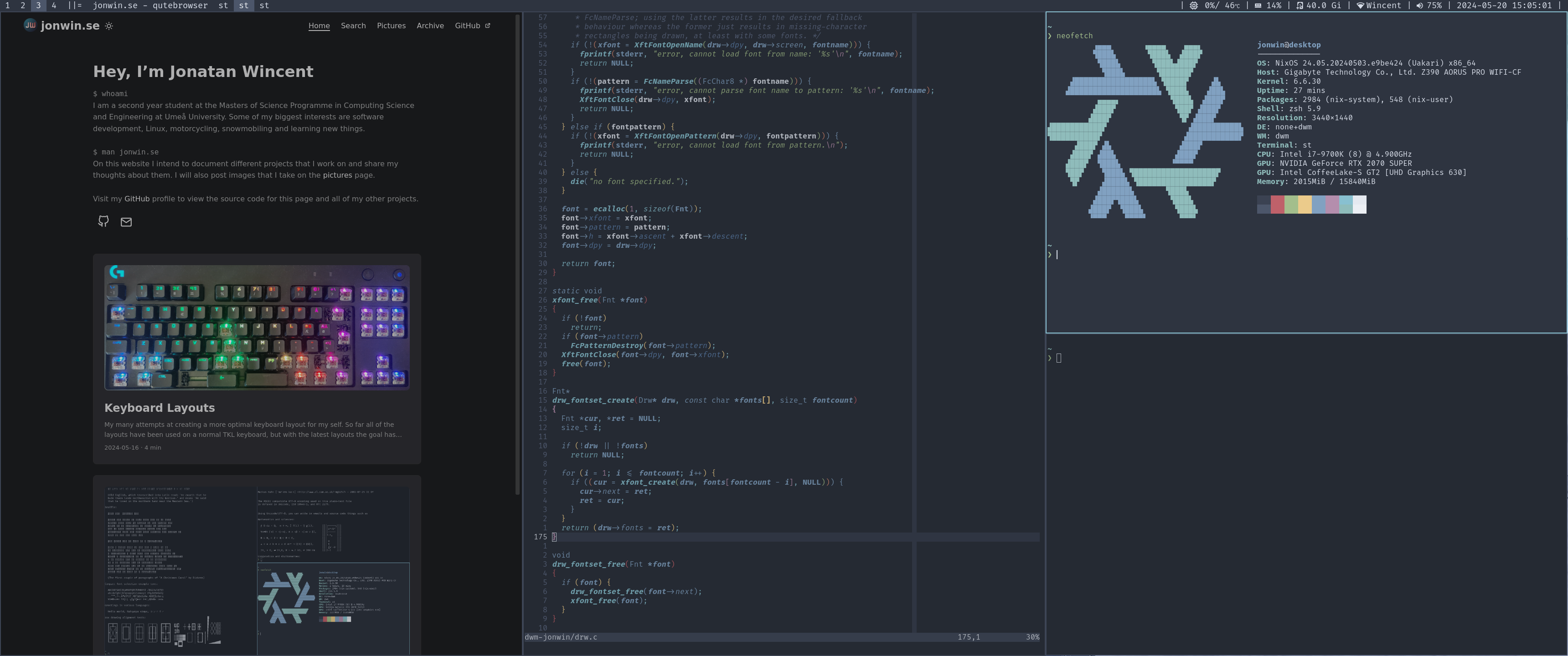
DWM (Dynamic Window Manager)
“dwm is an extremely fast, small, and dynamic window manager for X.” - suckless.org This post talks about my dwm configuration and the changes I have made to it. I have installed quite a few patches and made some modifications of my own, I have also added a flake.nix to make installation on NixOS really simple. You can view the source code in my GitHub repository here. Patches Below is a list of all the patches I have installed with a short explanation of each patch, click the links to view the patches on suckless.org. ...
Keyboard Layouts
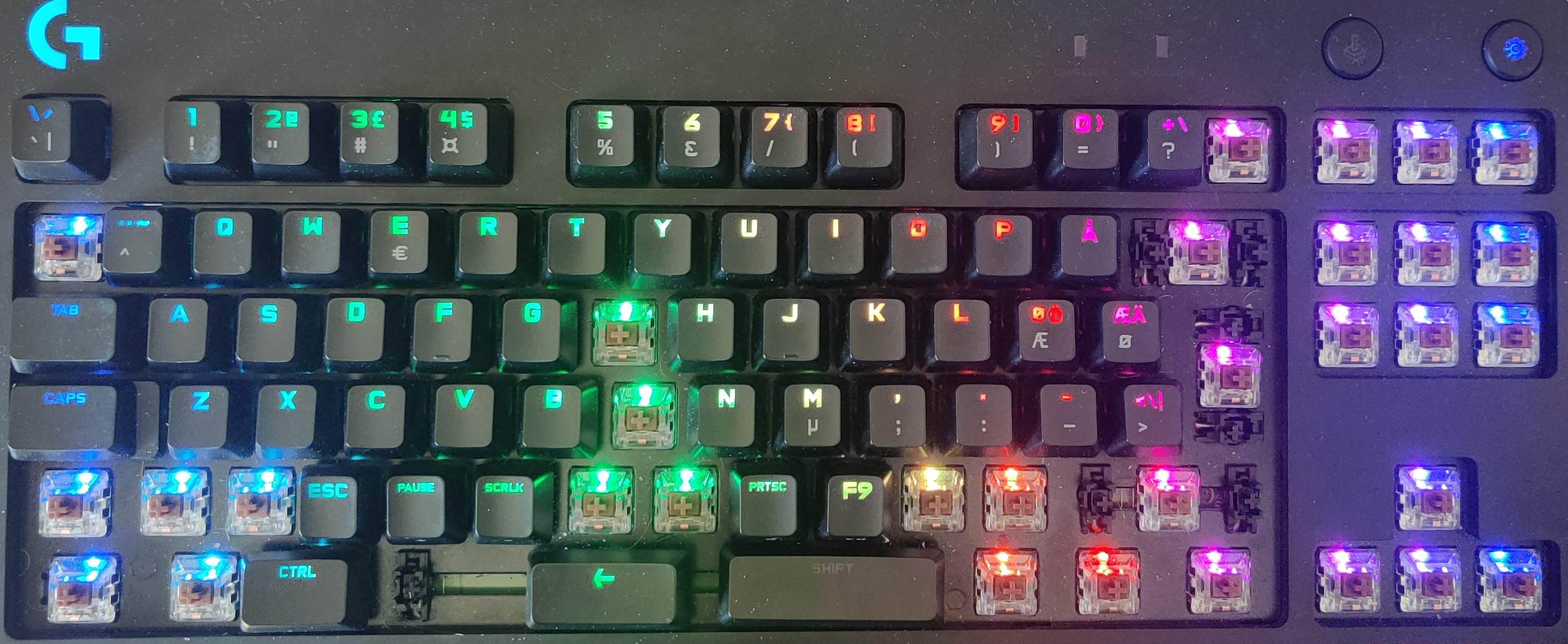
My many attempts at creating a more optimal keyboard layout for my self. So far all of the layouts have been used on a normal TKL keyboard, but with the latest layouts the goal has been to create a layout that would work on a Charybdis by Bastard Keyboards. See the cover picture for how the keys have been moved around to make the latest layout work on a normal keyboard. ...
St (simple terminal)
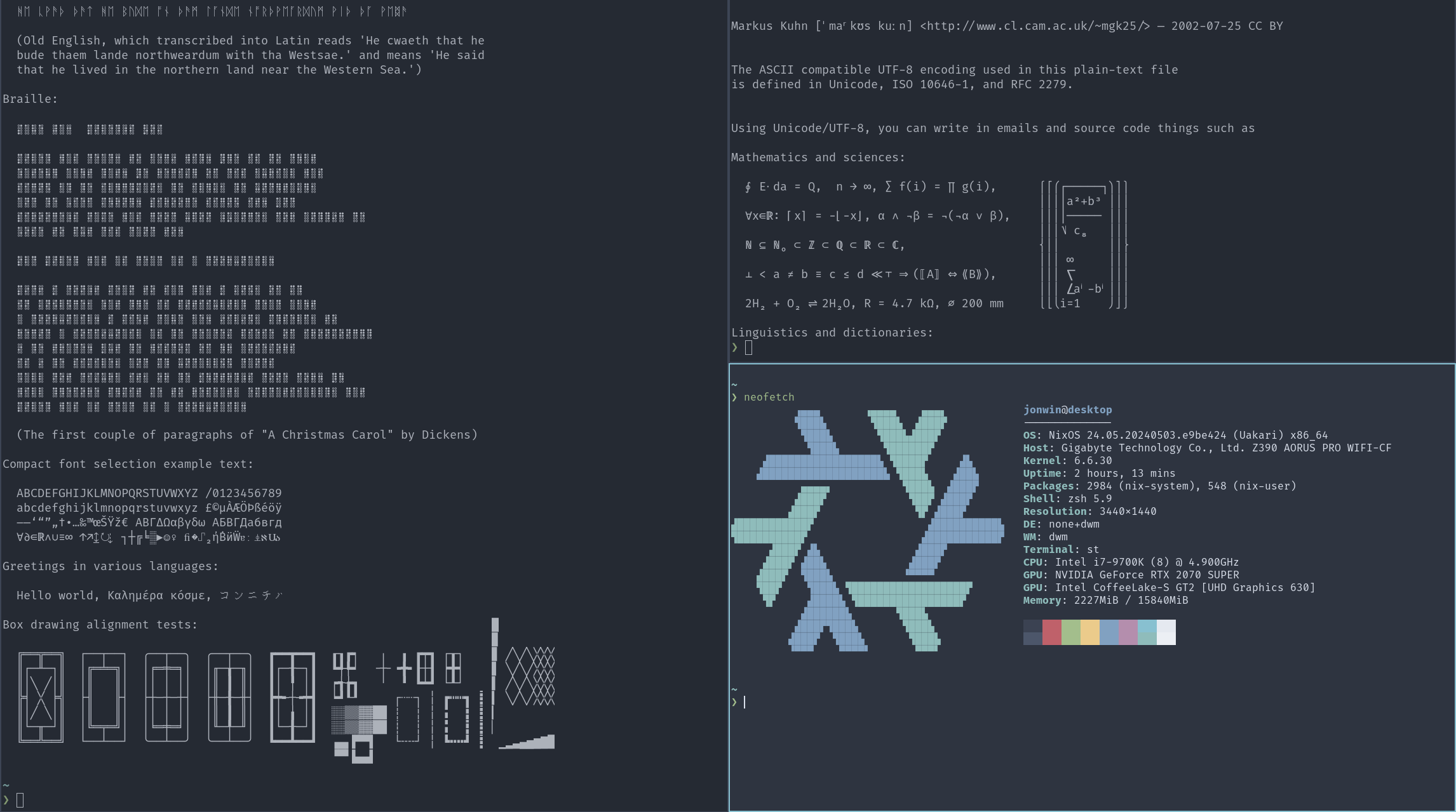
“st is a simple terminal implementation for X” - suckless.org. This is my configuration of the suckless terminal st. I have installed a few different patches and made some configuration changes to improve the usability and look of the terminal. Try My Config To try my configuration on any system with Nix installed run the following: nix run github:jonwin1/st-jonwin Patches Srollback: Allow scrolling back through the terminal output using keybinds or the mouse wheel. st-scrollback-20210507-4536f46 st-scrollback-reflow-20230607-211964d st-scrollback-mouse-20220127-2c5edf2 st-scrollback-mouse-altscreen-20220127-2c5edf2 Boxdraw: Custom rendering of some characters for drawing of boxes etc. with gapless alignment. st-boxdraw-v2-0.8.5 Alpha st-alpha-20220206-0.8.5 Alpha Focus Highlight st-focus-20200731-patch_alpha Ligatures: Adds proper drawing of ligatures. A combination of st-ligatures-alpha-scrollback-0.9 and st-ligatures-boxdraw-0.9, see st-ligatures-boxdraw-alpha-scrollback-2024-04-24-0.9.diff Visual bell 2: Adds a small visual bell in the top right of the terminal. st-visualbell2-basic-2020-05-13-045a0fa st-visualbell2-enhanced-2020-05-13-045a0fa Newterm: Allows spawning a new st terminal with the same working directory as the current st instance. st-newterm-0.9 Copyurl: Allows copying URLs from the terminal with keybinds. st-copyurl-multiline-20230406-211964d Open copied url: Allows opening a url from the clipboard in a browser. st-openclipboard-20220217-0.8.5 Other Changes I have changed the font to FiraCode Nerd Font to add support for ligatures and nerd font icons. I have also changed the colors to colors from the Nord theme. ...